|
1. News from the Open Science Center
|
|
|
|
New staff and new programs
|
|
Train-the-Trainer Program
|
|
Designed to equip researchers and research support staff with both Open Science skills and the teaching tools to train
other researchers and students,
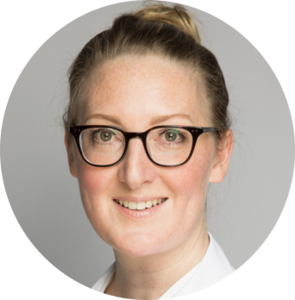
Dr. Sarah von Grebmer zu Wolfsthurn, the
Train-the-Trainer Program Coordinator, will develop and deliver a Train-the-Trainer program on Open Science at LMU, with the support of
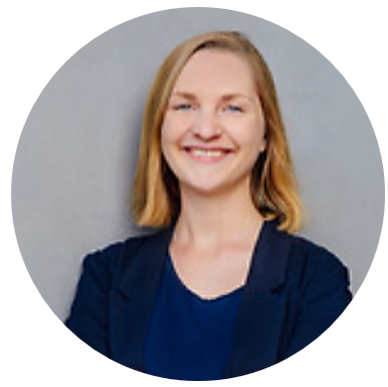
Dr. Sara Lil Middleton,
Training Development Coordinator and Community Engagement Manager.
A key strength of the program is its partnership with the Framework for Open and Reproducible Research Training (FORRT)
🤝
|
|
FORRT
is an international and interdisciplinary community project that promotes and curates open science training resources. They will contribute expertise in democratizing access to both learning and teaching materials in Open Science, and in ensuring equitable
participation across career stages, disciplines, and geographies.
Read the full FORRT-LMU OSC partnership press release.
A first pilot of this program will be delivered through the instructor training track of this year's Open Science Summer School taking place in September. Further development will take the views of OSC members who filled out our survey into careful consideration;
thanks for sharing your thoughts! 🙏
If you have additional thoughts, feel free to
get in touch with Sarah.
|
|
Switch to Open Program (SwOP)
|
|
This program supports research groups wanting to switch, as a team, to open research practices.
Dr. Malika Ihle,
OSC coordinator, provides close consultations to research groups, over the period of 6 months, following a flipped classroom format.
Reema Gupta,
FAIR data sharing expert, provides the tailored consultations on data management and metadata standards. Following the period of training, an open research practice guide is developed
to be used for reference for new projects and as an onboarding document for new team members.
|
|
|
|
|
|
🧠 The lab from Prof. Dr. med.
Inga Koerte, cBRAIN, from the Clinic and Polyclinic for Child and Adolescent Psychiatry, Psychosomatics and Psychotherapy at the LMU Munich Hospital, was the first group that performed the switch through our program. We are grateful for the generous support
of the cBRAIN Computer Scientist and OSC Fellow Alberto Villagran during the piloting of our program!
🙏 Congratulation to the whole team!🎉
|
|
|
|
The Laboratory of Experimental Stroke Research at the LMU Munich Hospital led by the OSC Scientific Board chair Prof.
Dr. med. Nikolaus Plesnila is currently undertaking their switch. 💪
|
|
|
|
|
All their labhandbooks will be made public with a CC-BY license to allow adaptation for your own labs. You can already
preview the first draft of the cBRAIN lab handbook here:
https://zenodo.org/records/16262261!
📢 We
now invite groups from other scientific fields to express interest and request more information by sending
this email to Malika. ✉️
|
|
Thanks to our nominees and newly elected scientific board members:
|
-
Prof. Dr. Anna Kümpel (Communication)
-
Dr. Sabine Hoffmann
(Head of statistical consulting laboratory StaBLab)
-
Prof. Dr. Nikolaus Plesnila
(Neuroscience)
-
Dr. Tobias Straub
(Head of the Core Facility Bioinformatics)
-
Prof. Dr. Alexander Wuttke
(Politics)
|
|
Your contributions will steer the directions of the OSCfor the term 2025-2027!
Dr. Malika Ihle
and Prof. Dr. Felix Schönbrodt stay in their roles as Scientific Coordinator and Managing Director, respectively.
|
|
The OSC in the University of Excellence
|
|
|
|
|
|
The OSC is proud to have consulted for 6 of 7 successfully funded Clusters of Excellence applications!
We are especially looking forward to continuing our collaborations with the Munich Cluster for System Neurology and with
the Excellence Cluster ORIGINS, both Funding Institutional Members of the OSC. Congratulations on the success of this monumental application project!
🎉
|
|
|
|
Survey results: Open Research at the LMU Biomedical Center
|
|
📊 A survey we conducted In January
2025 at the BMC revealed strong awareness but limited practice of open research practices, with key barriers being lack of training, norms, and incentives. Respondents overwhelmingly requested more training (particularly for FAIR data and code sharing), expert
consultations, and community support. The OSC will strive to provide these services at the BMC, an Institutional Member of the OSC, to the limits of our time-capacity.
Access the report and associated data, material, and code.
📢OSC
Institutional Members can contact us to coordinate the administration of this survey which assess attitudes toward open research practices and recruitment criteria.
📝
|
|
|
|
Prof. Dr. Anne-Laure Boulesteix awarded meta-research grant!
|
|
🌟Member of OSC's first Scientific
Board Team and senior member of the Open Science Initiative in Medicine, Anne-Laure has been awarded €750,000 over five years by the DFG - Reinhart Koselleck project. Her project, titled “Design, interpretation and reporting of empirical evaluations of statistical
methods” focuses on metascience and replicability in the context of methodological statistical research. Congratulations!🎉We
look forward to seeing how this research will advance open and rigorous research practices and to connect it with other LMU meta-research programs!
|
|
|
|
Guidelines about research data integrity by Dr. Elmar Spiegel
|
|
📚Ensuring research data
integrity is essential for accuracy and reproducibility. Our associate member Dr. Elmar Spiegel from Helmholtz proposed practical guidelines for handling research data from planning and collection to processing:
Guidelines for Research Data Integrity
and a
checklist to improve robustness and reliability in science.
|
|
|
|
|
Research Data Rescue Hackathon - August 7
|
|
🗂️The Trump administration is
aggressively
deleting scientific and governmental research data, purging thousands of web pages and datasets related to climate, health, demographics, LGBTQ + issues, and more — silently erasing vital knowledge that underpins scientific
progress.
Grassroot initiatives like the "Data
Rescue Project" and "Safeguarding Research & Culture" have mobilized volunteers, librarians, and scientists to download and archive these resources before they
are lost forever.
We are running a hackathon which will directly support these efforts: Join the global coalition of data rescuers by turning
your own laptop into a Research Data Rescue Node, scraping at-risk data sets, and breathing new life into your old HDD as part of the global, decentralised network.
|
|
Whether you’re a coder, a librarian, social media enthusiast, or just curious — everyone can contribute.
|
|
Open Science Summer School 2025: Public Lectures, Sept 15.-17.
|
-
Prof. Dr. Richard McElreath, Director of Max Planck Institute for Evolutionary Anthropology: "Science
as amateur software development"
-
Dr. Tim Errington, Senior Director of Research at the Center for Open Science: "Assessing the replicability
of research"
|
|
“Open Access: From DEAL to Diamond”
|
|
💎 On June 24, we hosted an event
on managing publication costs and the future of publishing. The DEAL is a national initiative that negotiates publishing agreements and processing fees with for-profit academic publishers. Diamond Open Access, in contrast, refers to publishing models where
neither authors nor readers pay fees, supported instead by institutions or public funds. Over 70 guests joined the event to discuss publication models beyond the DEAL, aiming to regain scientific autonomy. Discussion of these alternative models included:
|
-
Journal flips or founding of Diamond Open Access journals
-
Community-led publishing like
Peer Community In
-
“Replacing Journals” — exploring a modular and interoperable infrastructure designed as a public good for scholarly publishing
|
|
|
|
Software Carpentry Workshops
|
|
|
|
💻Twelve out of our 15 newly
certified Software Carpentry instructors have already collaboratively delivered 4 two-day workshops covering the Shell, Git, and either R or Python. Over 150 early career researchers registered to attend and fill our 100 available seats! Attendees came from
the Faculties of Medicine, Biology, Chemistry, Business Administration, Statistics, Social Sciences, Language & Literature, History & Arts, and Study of Culture. More workshops will be organised in the future thanks to the dedication of our volunteer instructors
and fellows. 🙏
|
|
|
|
4. Welcome to our new members!
|
|
|
|
The Open Science Center now counts 113 individual members. Please consult the
list of all our members to find potential
collaborators! 👋
|
|
|
|
We are happy to introduce our latest members to you:
|
|
|
|
|
|
Prof. Dr. Peter Edelsbrunner
|
|
|
|
Welcome to our new OSC Fellows!
|
|
|
|
Additionally, the count of OSC Fellows continues to rise. We acknowledge and value their voluntary work in leading grassroots
initiatives as early career researchers. We will continue to share further leadership development opportunities with them. Thanks for your contributions and welcome!
|
|
|
|
|
|
History & Arts
Hacky Hour, Wikipedia Event
|
|
|
|
|
|
Social Sciences
Open Science Initiative in Statistics
|
|
|
|
|
|
Math, Informatics & Stats
Software Carpentry Instructor
|
|
|
|
|
|
Medicine
Software Carpentry Instructor
|
|
|
|
|
|
Medicine
Software Carpentry Helper
|
|
|
|