|
|
The Open Science Center now has a coordinator!
|
|
|
|
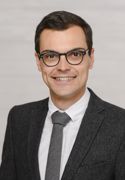
We are very happy to introduce you to our first Open Science Center Coordinator Malika Ihle, who joined
our team on the 1st May 2022.
Malika has been dedicated to improve the openness, reliability, and reproducibility of her own research, as well as academic research in general, during her PhD and post-docs in the field of biology. She has then coordinated Reproducible Research Oxford, a
grassroots initiative promoting open research at the University of Oxford, for 2.5 years, before chosing to join us to continue fulfilling her vocation. We are very excited to welcome her to the OSC.
|
|
|
|
|
We are looking forward to further promote open and reproducible research with Malika’s help here at the
LMU. Welcome Malika!
|
|
|
|
News from institutional members
|
|
|
|
·
10. and 24.11.2021:
Workshop: “Tips and tools for a reproducible workflow“ led by Dr. Caroline Zygar-Hoffmann and Moritz Fischer (slides
day 1, slides day 2)
·
16.11.2021: German Reproducibility Day by the German Reproducibility
Network (programme)
·
08.03.2022: Workshop: “Open Data, Data Sharing und Datenschutz der Medizin:
Wunsch und Wirklichkeit“ held by the LMU Open Science Initiative in Medicine (OSIM) and the Institute for Medical Information Processing, Biometry, and Epidemiology (IBE) (more
information)
|
|
|
|
Please
register for this symposium and panel discussion jointly organised by the LMU OSC and the Deutscher Hochschulverband (DHV) :
20.06.2022, 16:00-18:00: "How paper mills publish fake science industrial-style - is there really a problem
and how does it work?"
Our trust in academic publishing is the foundation of science. However, there is now an unprecedented
industry-style, AI-supported production by paper mills of fake scientific manuscripts which has scaled-up to support a billion-euro industry. Its scope is a concerning, systematic criminal attack on the permanent scientific record.
|
|
·
“Fake science publications by paper-mills: pollution of the permanent scientific record” by Bernhard
Sabel (Director, Inst. of Medical Psychology, Univ. Magdeburg)
·
"Radical steps to improve the quality of the preclinical research literature" by
Jennifer Byrne (Director of Biobanking,
NSW Health Pathology, Univ. Sydney)
·
“Scientific fraud: whose problem is it?"
by Dorothy Bishop (Prof. of Developmental Neuropsychology, Univ. Oxford)
·
“The publishers´ perspective of fraud & fake in scientific
publishing” by
Chris Graf (Research Integrity Director, Springer/Nature, London)
|
|
This event will be hybrid and take place at
Luisenstr. 37, Munich as well as on Zoom.
|
|
|
3. Publications from our members
|
|
|
|
In this section we feature selected papers from our members relating to open research.
|
|
·
Our member Julian Unkel was a co-author for: „An agenda for open science
in communication“. In order to face the challenges which have caused low reproducibility in ommunication research, seven suggestions to adopt open science practices are proposed… (https://doi.org/10.1093/joc/jqz052)
·
Our members Katrin Auspurg and Josef Brüderl also published a new paper: „Has
the Credibility of the Sciences Been Credibly Destroyed? Reanalyzing the "Many Analysts, One Data Set" Project“. The paper gives insight into why the results on this project diverged so much and how in the future this can be avoided. This leads
to a broad conclusion on how social science research can become more credible… (https://doi.org/10.1177/23780231211024421)
|
|
Note: If you have a new publication about open research and related topics, send a note to
franka.etzel@campus.lmu.de,
and we will be happy to feature it in our next newsletter.
|
|
|
4. General news about open research
|
|
|
|
Open Science Policy at the University of Erlangen
|
|
The Friedrich-Alexander-University Erlangen-Nürnberg (FAU) is the very first university in Germany
to pass an
Open Science Policy. On 13th October 2021 the Policy developed by the Chief Information Officer, the Open-Access-Manager, the University Management, and the Service Units, went into effect.
|
|
|
Open Science Policy at the University of Konstanz
|
|
On 24th November 2021, the senate and rectorate of the University of Konstanz passed the
Open Science Policy with the goal to make all steps of the scientific process openly accessible and reproducible. The University of Konstanz is among the first Universities in Germany to make the principles
of Open Science an official guiding principle.
|
|
|
|
The Open Science Center now counts 73 members. We are happy to introduce our 4 latest members to you!
|
|
|
|
Visit our website at:
www.osc.lmu.de and follow us on Twitter at:
@lmu_osc
Were you forwarded this email by a colleague? Make sure you never miss a OSC newsletter by subscribing! Sign
up here.
Do you have any suggestions or contributions for the next newsletter? Or perhaps you'd like to
publish your news on our website, or request a tweet/re-tweet from our account? Email us at franka.etzel@campus.lmu.de
|
|
|
|