|
1. News from the Open Science Center
|
|
|
|
|
|
The LMU Open Science Center has launched its new website, bringing together our events, training opportunities, and open
educational materials in one place. What resources can you find there?
|
|
|
|
|
|
|
The
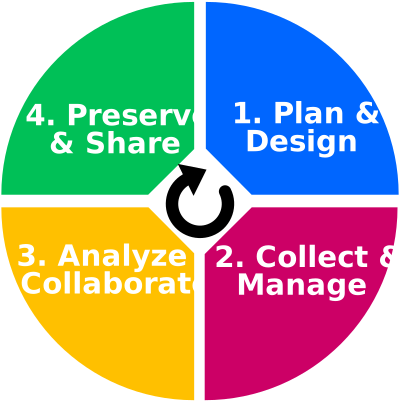
research cycle handbook is a unique tool for researchers to
incorporate open research practices step-by-step into the research life cycle of their projects and create a tailored research practice handbook for their research group.
|
|
|
|
|
The
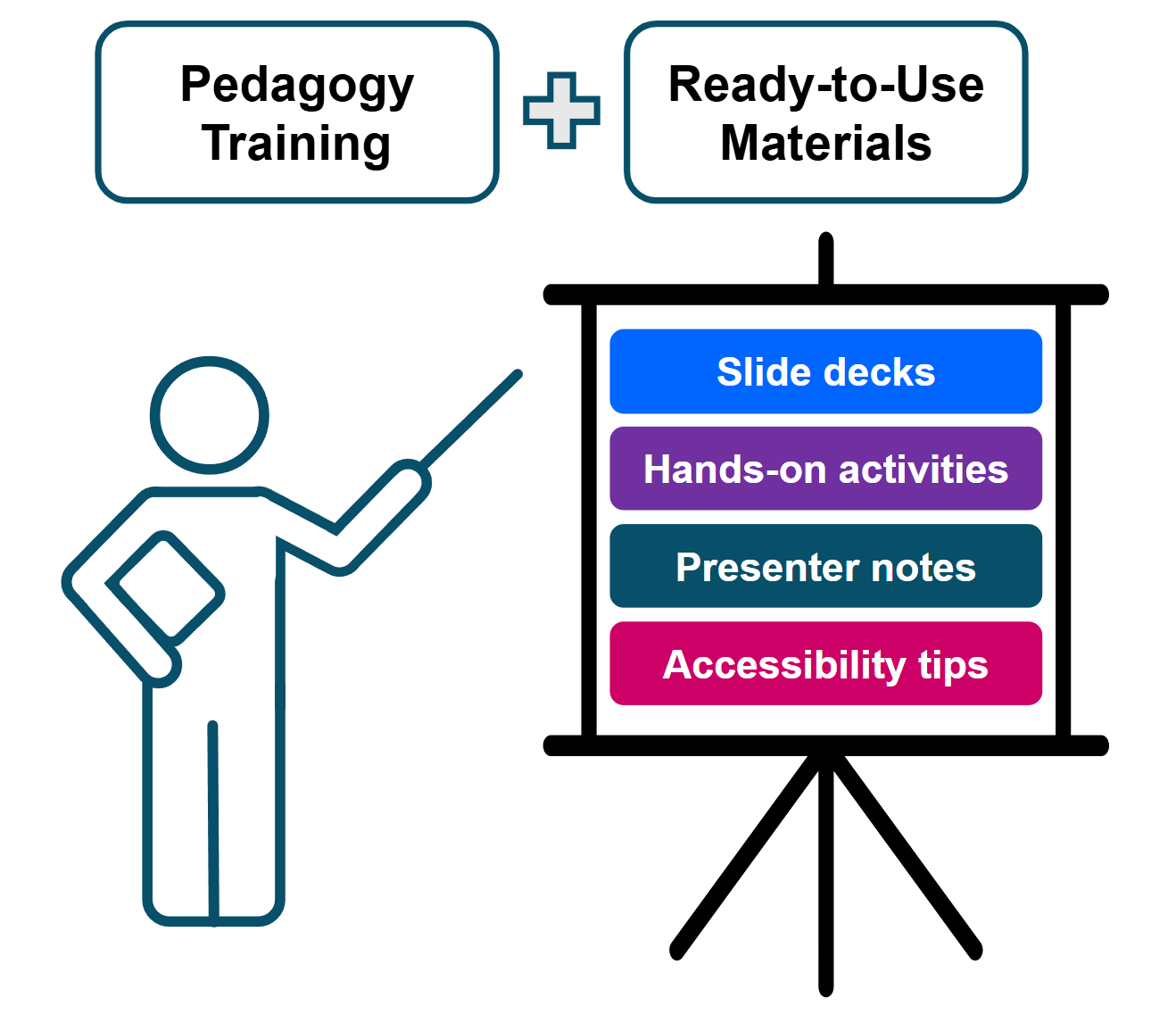
educator’s toolkit equips you with all you need to teach students
about open research tools and practices: ready-to-use slide decks, practical exercises, and pedagogical guidance. Find materials for sessions on topics such as Quarto, Git/GitHub, and Zotero. Look out for our new materials on teaching R and RStudio!
|
|
|
|
|
|
|
|
Our
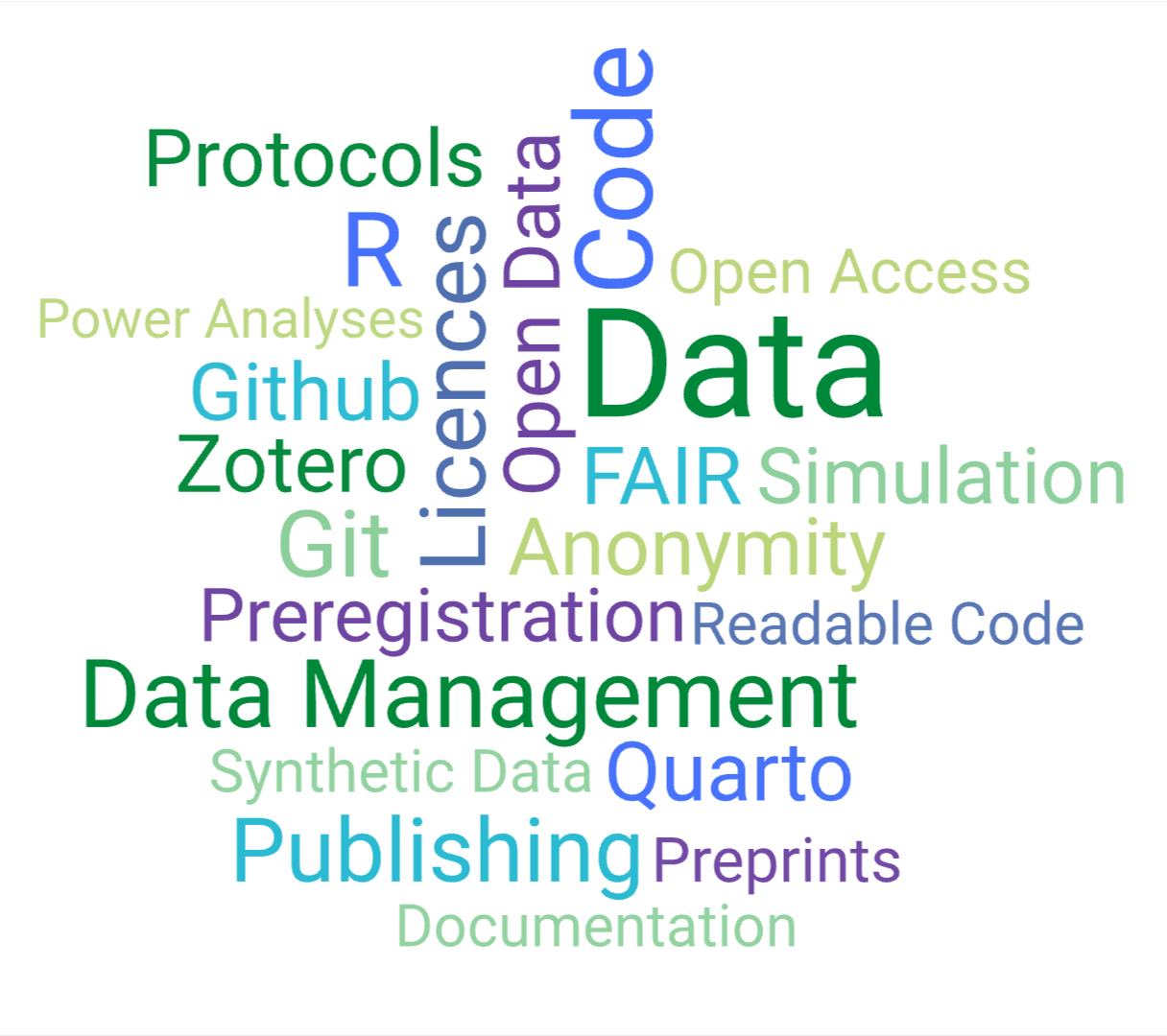
self-learning catalog contains a growing collection of self-paced tutorials, and materials
from workshops and Summer Schools. Interested in learning about data anonymization
and synthetic data generation? These two new self-paced tutorials are now available for self-learning!
|
|
|
|
|
Our poster “Embedding open research practices at LMU Munich and beyond” showcasing these resources has already been presented at several public events, such as the Future of Open
Research: Reliable, Responsible, Equitable (FOR2026) conference. It received positive feedback, including from our funders, the
Volkswagen Foundation, and other universities, who already make use of our openly licensed resources.
Read more and download the poster here:
https://zenodo.org/records/19626907
|
|
|
|
|
Marking 5 years of the LMU Open Science Summer School!
|
|
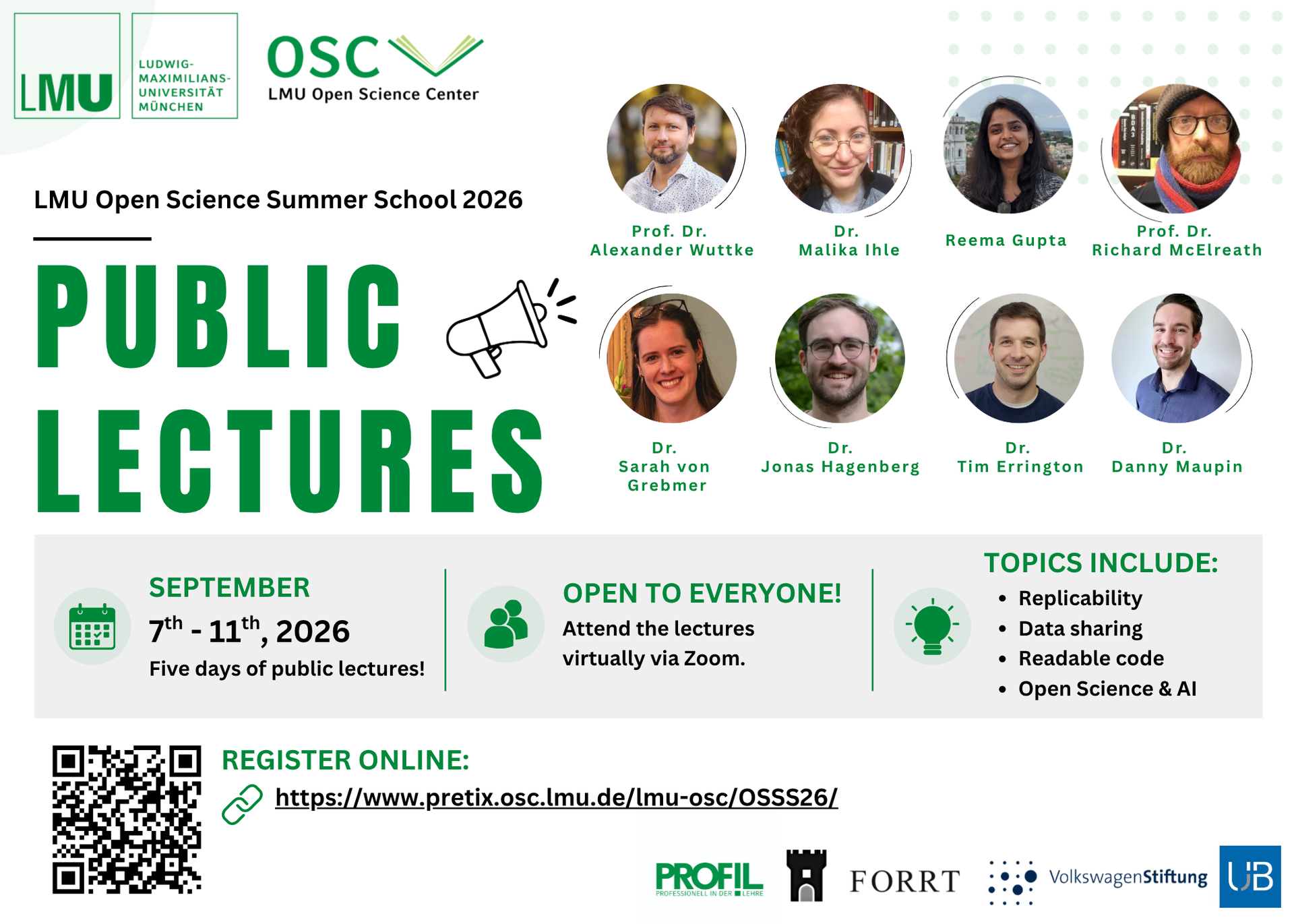
The LMU Open Science Center will host its 5th
Open Science Summer School this September (7th – 15th, 2026). While applications for the hands-on training have now closed, registration for the public lectures
remains open. The lectures are free to attend and cover topics including AI and Open Science, writing readable code, and computational reproducibility.
See the
summer school website for the full lecture
program and registration details.
|
|
|
|
|
New funding institutional member
|
|
|
|
|
|
|
SHARP:
Simulation-Based Learning in Higher Education: Advancing Research on Process Diagnostics and Personalised Interventions
|
|
|
|
|
SHARP is committed to advancing rigorous, transparent, and reproducible research in the learning sciences. We are grateful
to SHARP for its financial support of the OSC and are thrilled to announce that
all of its members have priority access to our training and consultations!
|
|
|
|
|
University-wide survey on open research
|
|
What are the views of LMU researchers on open research practices? The full report of our University-wide survey will be
published soon. For now, a teaser of the results:
|
|
|
|
|
|
|
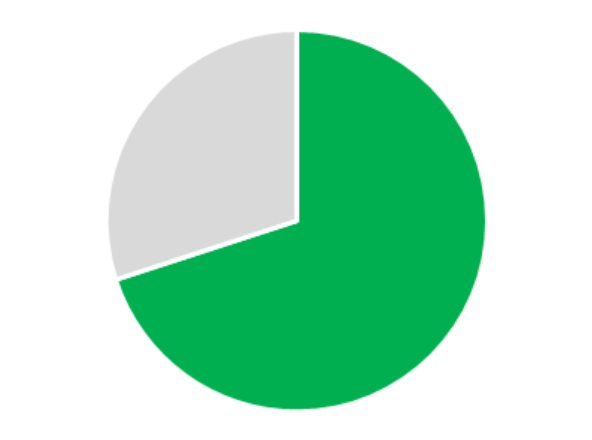
70% of 588 respondents requested additional training
on all proposed topics (e.g. research data-sharing strategies, reproducible workflows) across all fields of research (i.e. from the medical sciences to the humanities)
and across all career stages (with even higher demand from PhD students).
|
|
|
|
|
We'd like to extend our sincere thanks to everyone who participated and shared their perspectives. Learn
more about this survey here.
🎉 We'd also like to congratulate
the winners of our random prize draw:
• Timo Denk, Chen Luo,
and Jehan Le Cadre from the Faculty of Biology,
• Elli Schmidbauer
and Nina Abrahams
from the Faculty of Social Sciences,
• Kristin Weingart from the Faculty of Protestant
Theology,
• Moritz Heene, from the Faculty of Educational
Sciences and Psychology,
• Ozan Nacitarhan from the Faculty of Physics,
• Francesco Biasioni from the Faculty of Economics,
• Nadine Koch
and Daniel Weinert from the Faculty of Medicine,
• Simon Graf
from the Faculty of Philosophy, Philosophy of Science and Religious Studies,
• And three researchers from the Faculty of Medicine, Physics, and Art & History, who preferred to remain anonymous.
|
|
|
|
2. News from around the world
|
|
New DFG Position Paper on Strengthening Academic Freedom and the Resilience of Research
|
|
The German Research Foundation (DFG) has published a new position paper on safeguarding academic freedom and strengthening
the resilience of the research ecosystem. The recommendations emphasize robust research practices, effective self-regulation, transparent science communication, critical reflection, and open research as key elements for maintaining public trust in science.
These priorities closely align with the mission of the LMU Open Science Center to promote open, responsible, and reproducible research across disciplines.
Check out the full paper here:
https://doi.org/10.5281/zenodo.20830204
|
|
|
|
|
|
OSC members Prof. Marko Sarstedt and Dr. Susanne Adler co-authored Expedition Open Science Land: A Travel Guide for Business
Research, a new book that introduces Open Science through an engaging and accessible "travel guide" for business researchers.
|
|
Dr. Sabine Hoffmann, a member of the OSC's Scientific Board, is the lead author of a new international guideline published
in The BMJ. The guideline provides recommendations for improving the quality, transparency, and reproducibility of research based on routinely collected health data.
|
|
OSC members Prof. Katrin Auspurg and Daniel Krähmer co-authored a publication examining whether social scientists share
their analysis code and whether published survey-based findings can be reproduced.
|
|
OSC members Profs. Stefan Feuerriegel and Barbara Plank contributed to the newly published GUIDE-LLM reporting guidelines,
providing researchers with a framework for transparently reporting the use of large language models (LLMs) in research.
|
|
Several OSC members contributed to several recent Nature publications investigating reproducibility, replicability, and
analytical robustness across hundreds of studies. The findings highlight both encouraging progress and the continued importance of rigorous and transparent research practices.
|
|
Congratulations to OSC Fellow and Special Advisor Maximilian Frank on receiving the 2026 German Psychological Society’s
Award for Quality Assurance in Psychology. We are delighted to see his dedication to transparent and trustworthy research recognized and wish him continued success in his future work.
|
|
|
|
4. Welcome to new OSC members!
|
|
|
|
|
The Open Science Center now counts 120 individual members.
Please consult our
members' webpage to find potential collaborators!
👋
|
|
|
|
|
We are happy to introduce our latest members to you:
|
|
|
|
|
|
|
|
Math, Informatics & Stats
|
|
|
|
|
Welcome to our new OSC Fellows!
|
|
|
|
|
Additionally, the count of OSC Fellows continues to rise. We acknowledge and value their voluntary work in leading grassroots
initiatives as early career researchers. We will continue to share further leadership development opportunities with them. Thanks for your contributions and welcome!
|
|
|
|
|
|
|
|
Math, Informatics & Statistics
Open Science Initiative in Statistics
|
|
|
|
|
|
|
|
Social Sciences
Open Science Seminar Instructor
|
|
|
|
|